
There is nothing quite like the excitement of packing up the car for a road trip. Whether you are heading out for a weekend in the Sierras or just navigating the daily commute through North County, your vehicle represents freedom and reliability. But that reliability depends on one critical system above all others: your brakes.
At Army Mechanics Inc., we see it all the time. A customer comes in for a routine oil change, and we notice brake pads worn down to the metal backing. It is a sobering moment because we know that driver was just one emergency stop away from a serious accident. As a veteran-owned and family-operated shop, we don’t look at brake service as just another line item on an invoice. We look at it as a responsibility. When you bring your car to us for brake repair in Escondido, we treat that vehicle like it’s carrying our own family.
Before you hit the 15 or the 78 for your next adventure, you need to be sure your stopping power is 100%. Neglecting brake maintenance doesn’t just lead to more expensive repairs: it puts lives at risk. Here is everything you need to know about identifying brake trouble before it turns into a crisis.
The Early Warning: High-Pitched Squealing
Have you ever pulled up to a stoplight and heard a high-pitched “chirp” or squeal coming from your wheels? Most people’s first instinct is to turn up the radio and hope it goes away. In reality, that sound is actually a safety feature by design.
Most modern brake pads are equipped with a small metal tab called a “wear indicator.” When the friction material on the pad wears down to a specific level (usually around 2mm to 3mm), this metal tab makes contact with the rotor. This creates that unmistakable squeal. It is your car’s way of saying, “I’m getting thin, let’s handle this now.”
At this stage, the repair is usually straightforward: a simple pad replacement. Because we offer parts at cost with no markups, a pad replacement at Army Mechanics Inc. is an investment that protects your wallet from the much higher costs of rotor damage later on.
The Danger Zone: Grinding and Scraping
If you ignore the squeal, the next sound you’ll hear is much more alarming. A grinding or growling noise indicates that the friction material on your brake pads is completely gone. You are now experiencing “metal-on-metal” contact, where the steel backing of the pad is grinding directly against the cast iron brake rotor.
This is a critical safety issue. Metal-on-metal braking significantly increases your stopping distance and generates extreme heat that can cause your brakes to “fade” or fail entirely. Furthermore, grinding will quickly ruin your rotors. What could have been a simple pad swap now requires new rotors and potentially new calipers.
If you hear grinding, do not wait. Whether you bring it to our shop or call for our mobile auto repair service to come to your driveway, this needs to be addressed immediately. We operate on a foundation of honesty; we won’t try to sell you parts you don’t need, but we will be blunt about when a car is unsafe to drive.
The Pulsing Pedal: Warped Rotors and Heat Damage
Braking should be smooth. If you feel a vibration in the steering wheel or a “pulsing” sensation under your foot when you apply the brakes, you likely have warped rotors.
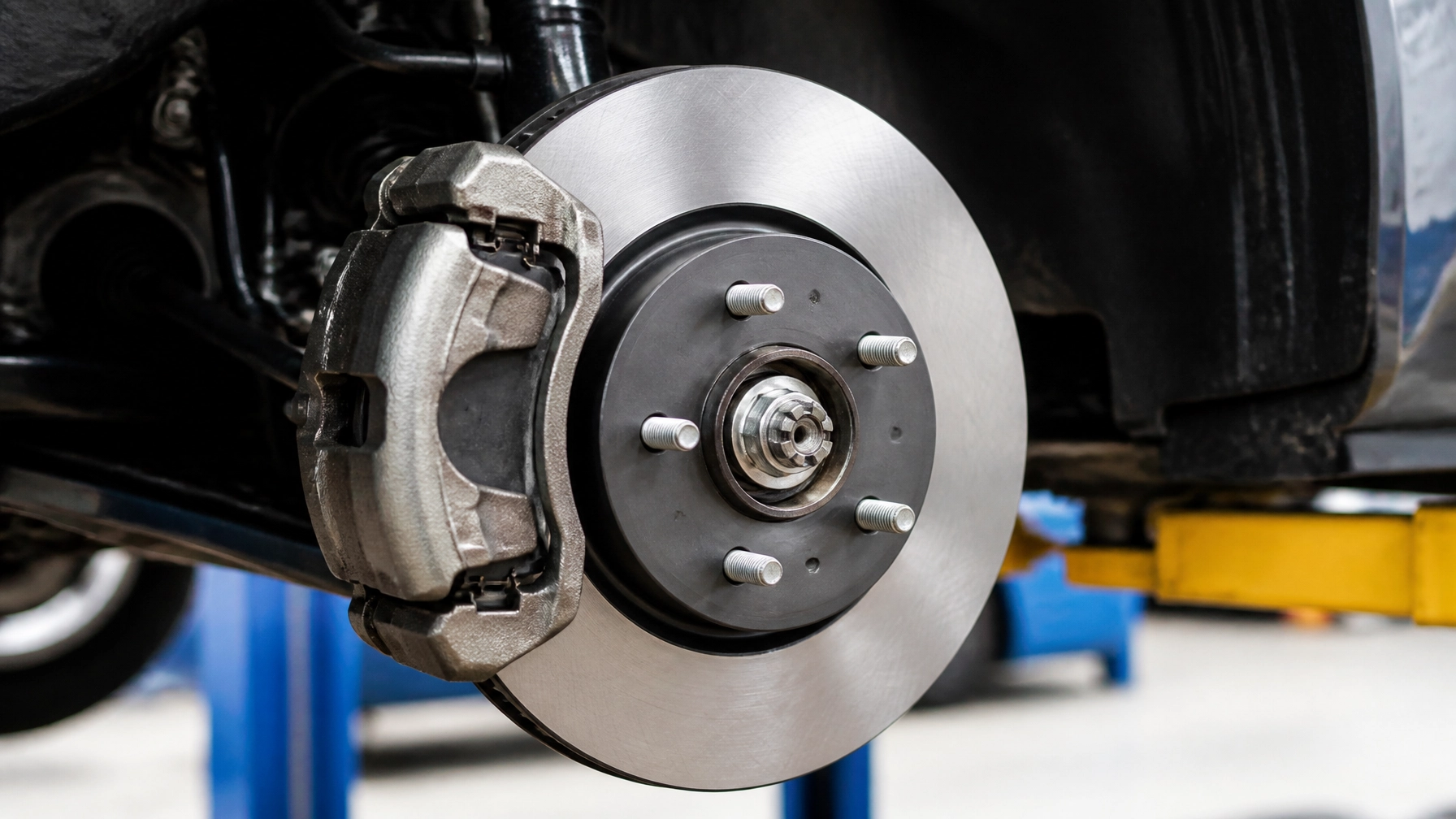
Rotors are the metal discs that your brake pads grip to stop the car. Over time, extreme heat: often from heavy braking or driving with worn pads: can cause these discs to become uneven. When the pads grip an uneven surface, they bounce, which creates that vibration.
Not only is this annoying, but it also reduces the effectiveness of your anti-lock braking system (ABS). Our ASE-certified technicians use precision diagnostics to determine if your rotors can be resurfaced or if they need to be replaced. Remember, every repair we perform comes with a 6-month labor guarantee, giving you peace of mind that the job was done right the first time.

The Soft Pedal: Hydraulic Issues and Old Fluid
When you step on the brake pedal, it should feel firm and responsive. If the pedal feels “spongy,” “soft,” or sinks all the way to the floorboard, you are looking at a potential hydraulic failure.
Brake systems rely on pressurized fluid to function. A soft pedal could mean there is air in the brake lines, a leak in a hose, or a failing master cylinder. Alternatively, it could be a sign that your brake fluid has absorbed too much moisture. Brake fluid is hygroscopic (it attracts water), and over time, that water can boil under the high heat of braking, creating gas bubbles that compress easily: resulting in that “mushy” feeling.
This is especially dangerous for road trips involving mountain descents, where your brakes are under constant stress. We include a thorough fluid check in our additional services and inspections to ensure your hydraulic system is airtight and ready for the road.
The Pull: When Your Car Wants to Veer
If your vehicle pulls to one side when you apply the brakes, it’s a sign that the braking force is uneven. This often points to a “stuck” or “frozen” caliper.
The caliper is the hydraulic clamp that squeezes the pads against the rotor. If a caliper piston gets stuck due to corrosion or debris, it might not apply pressure evenly, or it might fail to release, causing that wheel to drag. This uneven braking makes the car difficult to control in an emergency and puts unnecessary strain on your suspension and tires.
Because we specialize in mobile auto repair, we can often diagnose these issues right at your home or office. We understand that your time is valuable, and our goal is to get you back on the road safely without the hassle of a traditional shop experience if it isn’t necessary.
The Army Mechanics Difference: Honesty in Every Turn
Why choose us for your brake repair in Escondido? It comes down to our roots. As a veteran-owned business, we operate with a level of transparency that is unfortunately rare in the auto repair industry.
One of our biggest “secrets” is that we sell all parts at cost. Most shops make a significant portion of their profit by marking up parts by 30%, 50%, or even 100%. We don’t do that. You pay what we pay. We believe that by removing the incentive to “sell” you more parts, we can build a relationship based on trust. Our focus is on the labor: providing high-quality, ASE-certified expertise that ensures your vehicle is safe.
We treat every customer like family. If your brakes have another 5,000 miles of life in them, we will tell you. If they are a safety hazard that shouldn’t leave the parking lot, we will tell you that too.
A Simple Pre-Trip Brake Test You Can Do
Before you load up the suitcases, perform this quick “driveway check”:
- The Listen Test: With the windows down, drive slowly past a wall or in a quiet neighborhood. Apply the brakes. Do you hear any chirping or scraping reflecting off the wall?
- The Visual Check: Many modern wheels have large openings where you can see the brake pads without taking the wheel off. Look at the pad material pressed against the rotor. If it looks thinner than a couple of stacked quarters, it’s time for an inspection.
- The Pressure Test: With the engine off, pump the brake pedal a few times. It should get very firm and stay that way. If it slowly sinks to the floor while you hold steady pressure, you have a leak.
Schedule Your Peace of Mind
Don’t let a preventable brake failure turn your vacation into a nightmare. Whether you need a quick inspection, a pad replacement, or a full system overhaul, the team at Army Mechanics Inc. is here to help. From everyday sedans to fleet maintenance for local businesses, we provide the honest, reliable service you deserve.
Give us a call or visit our website to schedule an appointment. Let us handle the technical details so you can focus on the road ahead. We are proud to serve Escondido and the surrounding areas with the integrity of a veteran-owned shop.


Comments are closed